



Psoriasis-Prone Scalp: How to Identify and Care for It
Psoriasis is a chronic inflammatory skin condition that appears as red patches covered with white scales. It commonly affects the scalp, making it visible and often uncomfortable. Symptoms can significantly impact quality of life, which is why proper care is essential.

Thick, silvery scales that cling to the scalp, red patches along the hairline, itching that will not stop: a psoriasis-prone scalp is uncomfortable and often affects self-confidence too. It is not contagious and it is not caused by poor hygiene. With the right diagnosis and a well-adapted care routine, the scalp can become much more comfortable day to day.
Is it dandruff or a psoriasis-prone scalp?
The two are often confused, because both cause flakes and itching. A few signs help to tell them apart:
| Dandruff | Psoriasis-prone scalp | |
|---|---|---|
| Flakes | Small, white or yellowish, loose | Thick, silvery, firmly attached |
| Skin underneath | Normal or slightly pink | Red, well-defined, thickened patches |
| Where | Spread over the scalp | Patches, often at the hairline, behind the ears and on the nape |
| Elsewhere on the body | Sometimes eyebrows or sides of the nose | Sometimes elbows, knees or nails |
Only a doctor or dermatologist can confirm what is behind your symptoms. If you have never had a diagnosis, start there: it will help you choose the right care.
What can make it flare up?
- A family tendency: the predisposition often runs in families.
- Stress and fatigue, which many people notice before a flare-up.
- Cold, dry weather and dry indoor heating in winter.
- Scratching and friction: rubbing the scalp, harsh brushing or tight hats can irritate the skin.
- Lifestyle: smoking and alcohol are known aggravating factors for some people.
- Some medicines: if you notice a link, talk to your doctor before changing anything.
What a good scalp routine needs to do
- Loosen and lift the scales gently, so the scalp is cleaner and more comfortable, and so the next products can reach the skin.
- Moisturise, because a scaly scalp is a dry scalp.
- Soothe itching and the feeling of irritation.
- Respect the scalp's balance, without aggressive washing or scratching.
The Trichonix PSO routine
Step 1 – Before washing: Trichonix PSO Concentrate
The Trichonix PSO Concentrate is a pre-wash care for thick scales and plaques on the scalp or body. With 15% urea and salicylic acid, it softens and lifts scales while deeply moisturising the skin. Apply it to the affected areas, leave on for 15 to 40 minutes, then wash. Use it twice a week. In a 28-day test on 24 volunteers, flaking was reduced by 95.5%.
Step 2 – Washing: Trichonix PSO Shampoo
The Trichonix PSO Shampoo is a keratolytic shampoo for psoriasis-prone scalps with thick scales, itching and redness. Salicylic and glycolic acids gently exfoliate, while niacinamide, centella and the prebiotic Scalposine calm and rebalance the scalp. Use it 2 to 3 times a week. In a 28-day test on 24 volunteers, flaking improved by 92.3%.
Step 3 – In between: a gentle shampoo
On the other days, wash with a mild shampoo that does not irritate: the Trichonix Extra Mild Shampoo, or the Trichonix Oily Hair Shampoo if your roots get greasy quickly. Finish with the Trichonix Extra Mild Balm on the lengths if your hair feels dry.
What the ingredients do
- Urea (15%): softens thick scales and strongly moisturises.
- Salicylic acid: a keratolytic that helps loosen and lift flakes.
- Glycolic acid: a gentle exfoliant that smooths the surface of the skin.
- Niacinamide: helps calm redness and supports the skin barrier.
- Centella asiatica: a soothing plant extract.
- Scalposine (prebiotic): helps support a balanced scalp microbiome.
How to apply the concentrate and shampoo
- On dry hair, part your hair into sections and apply the PSO Concentrate directly to the scaly areas with your fingertips.
- Massage very gently, without scratching or pulling off the scales.
- Leave on for 15 to 40 minutes. A shower cap can make this more comfortable.
- Wet your hair, apply the PSO Shampoo, massage for 1 to 2 minutes and leave for another 2 to 3 minutes.
- Rinse thoroughly with lukewarm water.
- Let the loosened scales come away on their own, or comb gently with a wide-toothed comb.
Skinormil tip: never pick or scratch off scales. It irritates the skin and can make patches more visible. Let the concentrate and shampoo do the work.
Everyday habits that help
- Lukewarm water, never hot. Heat dries and irritates the scalp.
- Hairdryer on a medium setting, held at a distance.
- Soft brushes and loose hairstyles rather than tight ponytails.
- Breathable hats in winter, washed regularly.
- Hair colour: do a strand and skin test first, and avoid colouring during a flare-up.
- Look after yourself: sleep, stress management and moderate alcohol can make a real difference for many people.
When to see a dermatologist
Trichonix PSO products are cosmetic care for comfort and appearance. They do not replace medical care. See a dermatologist or your doctor if you have never had a diagnosis, if the patches spread beyond the scalp, if you notice changes in your nails or joint pain, if the scalp is very painful, or if there is no improvement after four weeks of regular use. The PSO products can be used alongside the care your doctor prescribes; ask them how to combine them.
Frequently asked questions
Is a psoriasis-prone scalp contagious?
No. It cannot be passed on by contact, sharing a towel or a hairbrush.
How often should I use the PSO Shampoo?
Two to three times a week. On the other days, use a gentle shampoo such as Trichonix Extra Mild.
Can I use the PSO Concentrate on other areas?
Yes, it is designed for thick scales and plaques on the scalp or body. Avoid the eyes, mucous membranes and broken skin.
When will I see a difference?
Many people feel more comfortable after the first uses. In tests, results were measured after 28 days of regular use. Give the routine at least four weeks.
Read also: DS or DS+? Choosing the Right Anti-Dandruff Shampoo and Itchy, Flaky Scalp in Winter.
This advice is for information only and does not replace the advice of a doctor, dermatologist or pharmacist.
The care in this article


Trichonix
Trichonix PSO shampoo
For: psoriasis-prone scalps with thick scales, itching and redness.
5.0 · 1 review


Trichonix
Trichonix extra mild shampoo
For: sensitive scalps and normal to dry hair, even with daily washing.
Put it into practice
Which routine suits your skin?
Answer a few questions and get a routine that fits you, in 1 minute.
Keep reading
All articles →-
 Hair & scalp
Oily Scalp and Hair: What Really Helps
Hair that looks flat by the end of the day? Find out why your scalp produces excess oil, the common…
Read article
-
 Hair & scalp
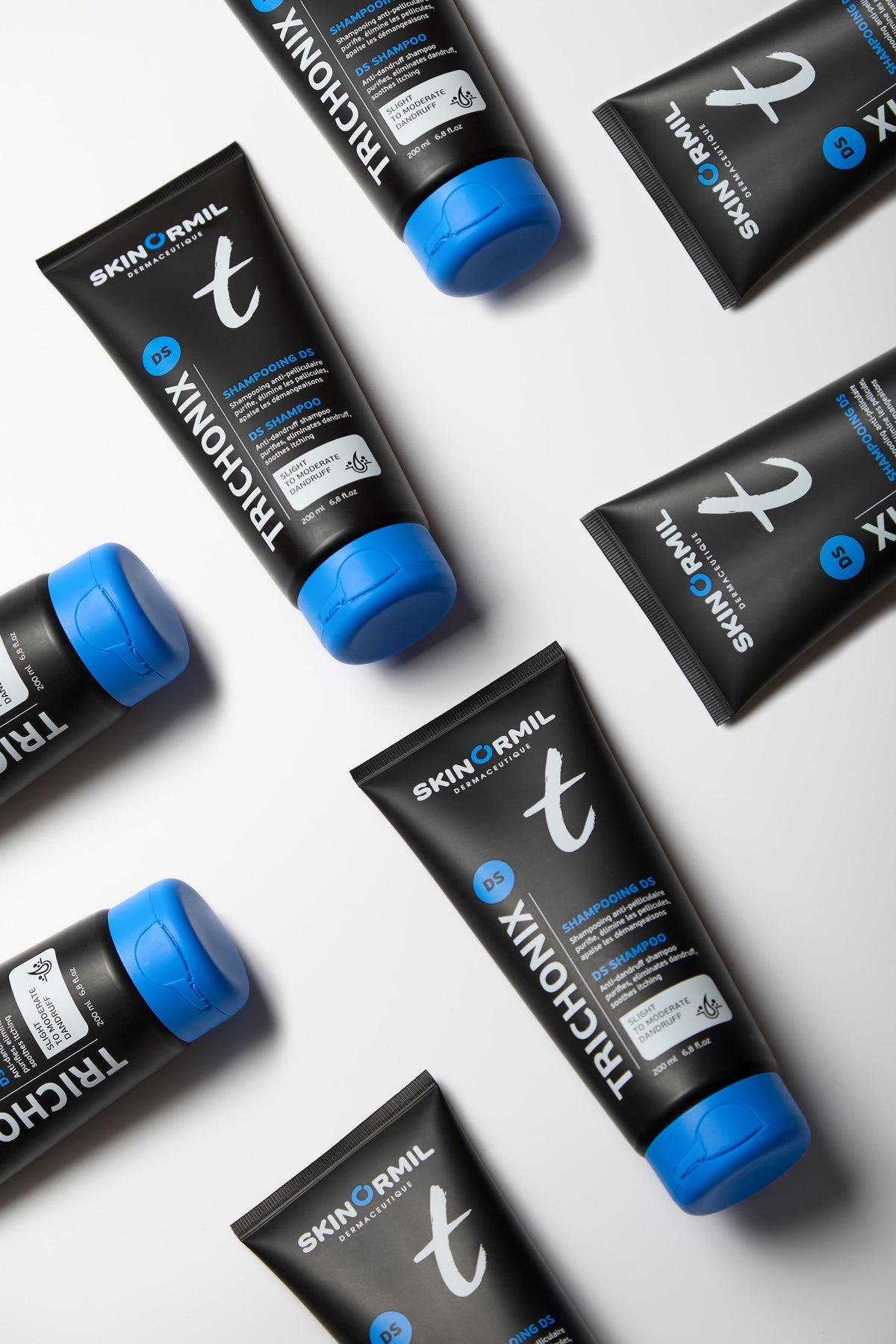
DS or DS+? Choosing the Right Anti-Dandruff Shampoo
Flakes, itching, redness: not all dandruff is the same. Here is how to tell mild dandruff from seborrheic dermatitis, and…
Read article
-
 Oily skin & acne
Post-Acne Marks: How to Fade Them
The breakout is gone but the mark stays. Learn the difference between post-acne marks and scars, and the habits that…
Read article
