Adult Acne: Why Breakouts Appear After 30
You thought breakouts ended with your teenage years, yet here they are: on the chin, along the jawline, sometimes just before your period. Adult acne is far more common than most people think, and it affects women in particular. The good news is that once you understand what drives it, it becomes much easier to manage.
Why does acne come back after 30?
Adult acne develops through the same mechanism as teenage acne: excess sebum, pores clogged by dead skin cells, the growth of acne-causing bacteria and inflammation. What changes are the triggers.
- Hormonal fluctuations. The menstrual cycle, stopping the contraceptive pill, pregnancy or perimenopause can all stimulate the sebaceous glands. Hormonal breakouts typically appear on the lower face: chin, jawline and neck.
- Stress. Prolonged stress raises cortisol, which in turn increases oil production and inflammation. Many people notice flare-ups during demanding periods at work.
- The wrong products. Rich, comedogenic creams and heavy make-up can clog pores, while harsh scrubs and alcohol-based toners damage the skin barrier and make inflammation worse.
- Lifestyle factors. Lack of sleep, smoking and a diet very high in sugar and refined foods can play a role for some people.
How adult acne differs from teenage acne
Adult skin renews itself more slowly, so marks and post-acne spots take longer to fade. It is also often more sensitive and more prone to dehydration. That is why aggressive "drying" treatments that may have worked at 16 often backfire at 35: the skin becomes tight and irritated, and the breakouts continue.
A gentle but effective routine
The goal is to regulate oil, keep pores clear and calm inflammation while respecting the skin barrier.
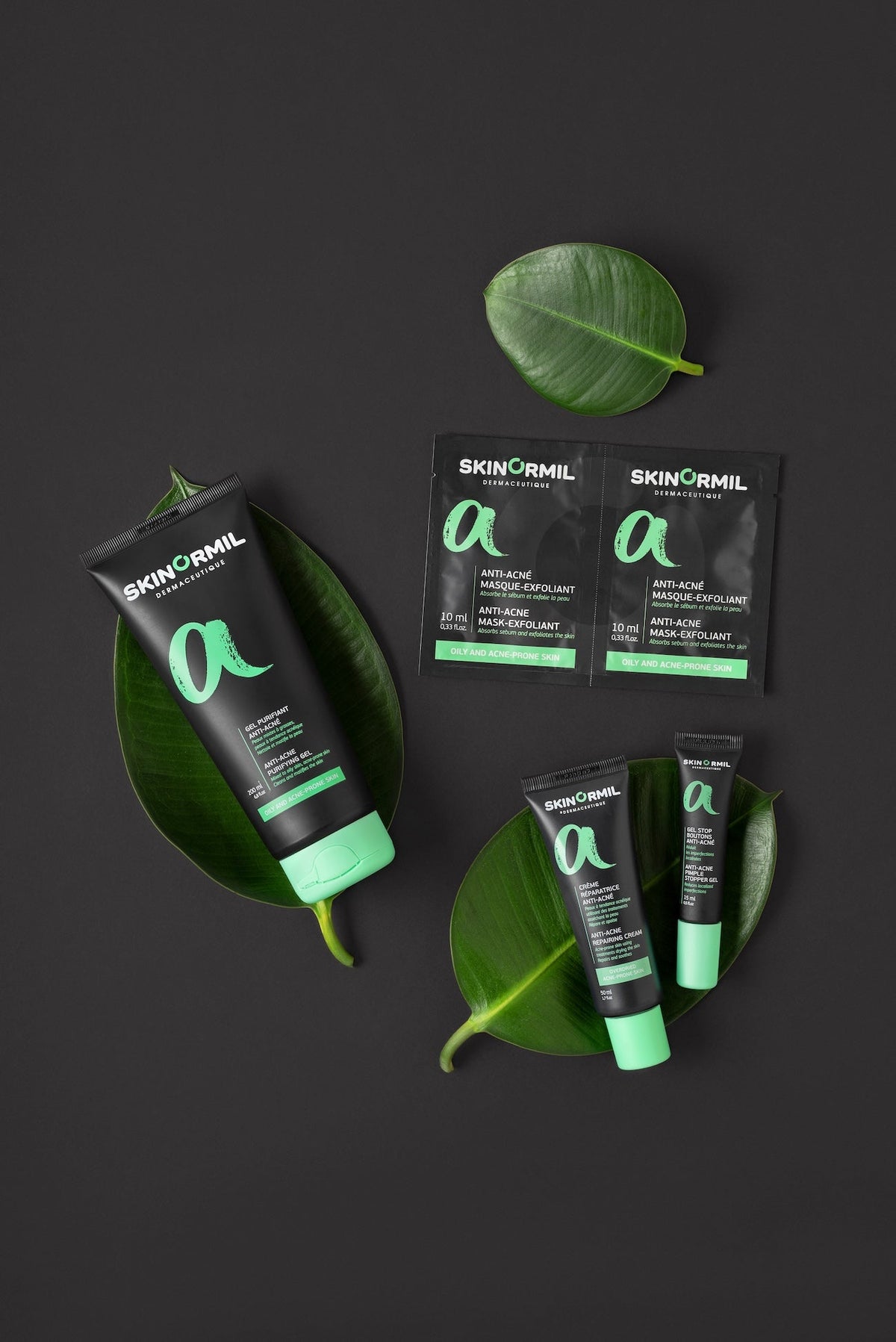
- Cleanse morning and evening with a soap-free gel designed for oily, blemish-prone skin. The Anti-Acne Purifying Gel removes excess sebum without stripping the skin.
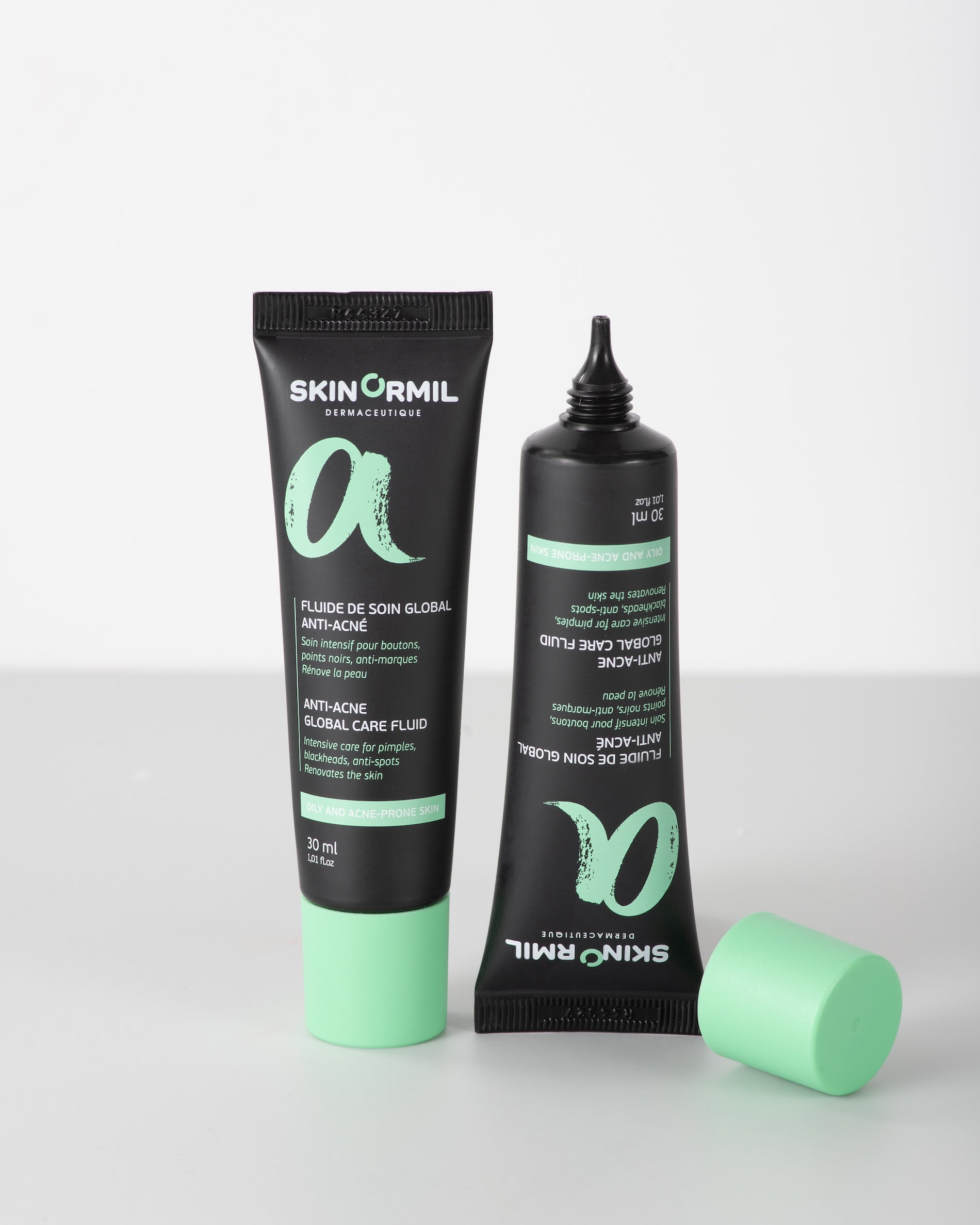
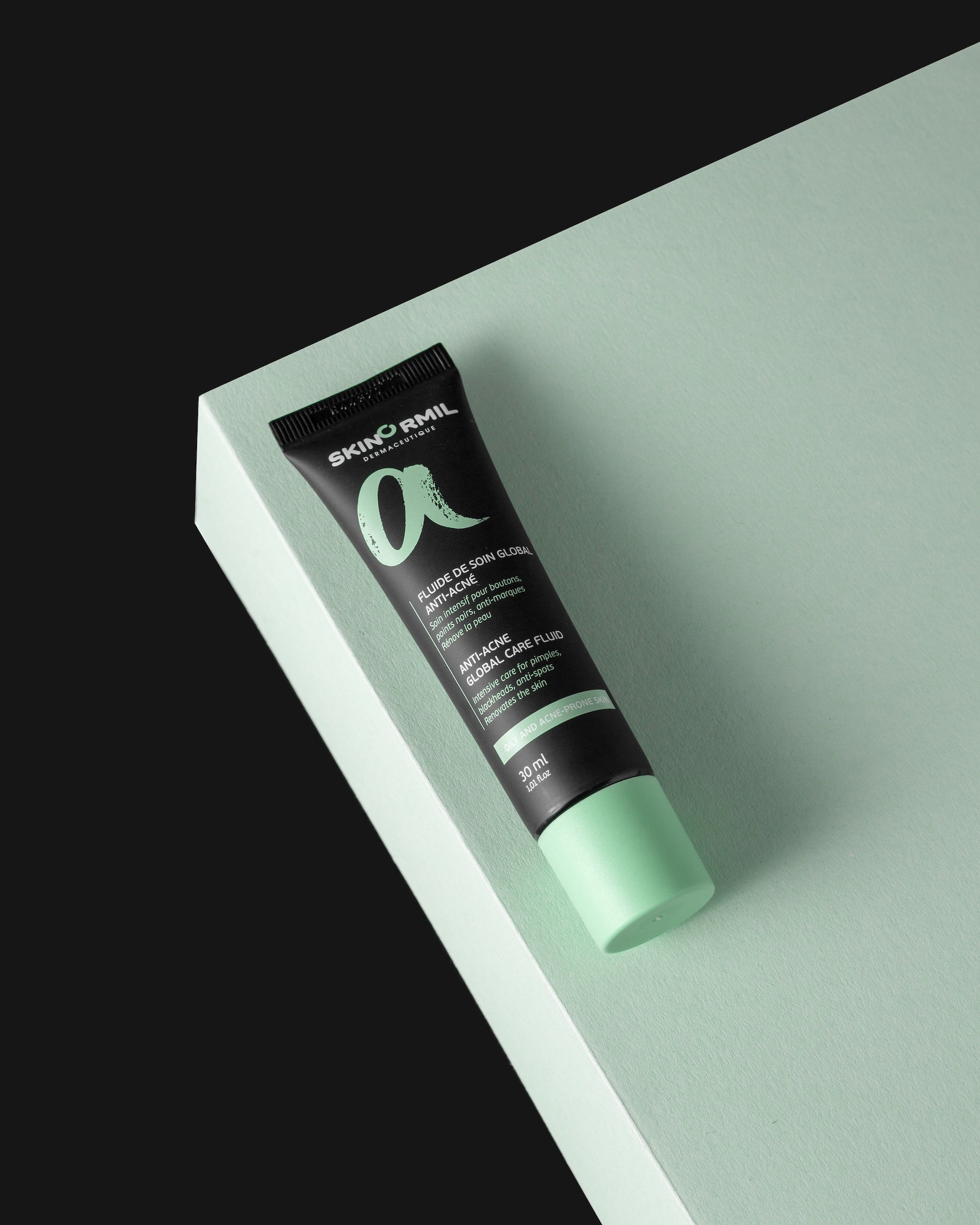
- Treat the whole face rather than just the spots. A fluid such as the Anti-Acne Global Care Fluid works on blackheads, inflamed blemishes and uneven texture at the same time.
- Target individual spots with a local treatment like the Pimple Stopper Gel, applied only on the blemish.
- Moisturise every day, even if your skin is oily. Dehydrated skin often produces more sebum to compensate.
- Protect from the sun with a light, non-comedogenic SPF to prevent dark marks.
Skinormil tip: give any new routine at least 6 to 8 weeks. Skin needs one or two full renewal cycles before you can judge the results.
When to see a professional
If your acne is painful, leaves scars, appears suddenly together with other symptoms (irregular cycles, excess hair growth) or does not improve after three months of consistent care, talk to a dermatologist or your doctor. Adult acne sometimes has a hormonal cause that is worth checking.
Recommended Products