
DS or DS+? Choosing the Right Anti-Dandruff Shampoo
White flakes on your shoulders, an itchy scalp, sometimes redness along the hairline: dandruff is very common, but it does not always have the same intensity. Choosing the right shampoo depends on how your scalp behaves.
What causes dandruff?
Dandruff is linked to an imbalance of the scalp. A yeast that naturally lives on the skin, Malassezia, feeds on sebum. When it multiplies, it irritates the scalp, speeds up cell renewal and causes visible flakes. Stress, cold weather, hormonal changes and infrequent washing can all make it worse.
Mild dandruff or seborrheic dermatitis?
- Mild to moderate dandruff: small, dry, white flakes, little or no itching, no redness.
- Severe dandruff and seborrheic dermatitis: larger, yellowish, oily flakes, persistent itching, redness and sometimes irritation that extends to the eyebrows, the sides of the nose or behind the ears.
Trichonix DS: daily care for mild dandruff
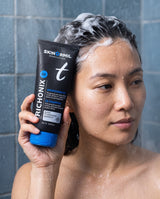
The Trichonix DS Shampoo is a delicate cleansing shampoo for scalps prone to dandruff. It reduces mild to moderate flaking and itching while respecting the scalp, so it can be used regularly, as often as you wash your hair.
Trichonix DS+: intensive care for flare-ups
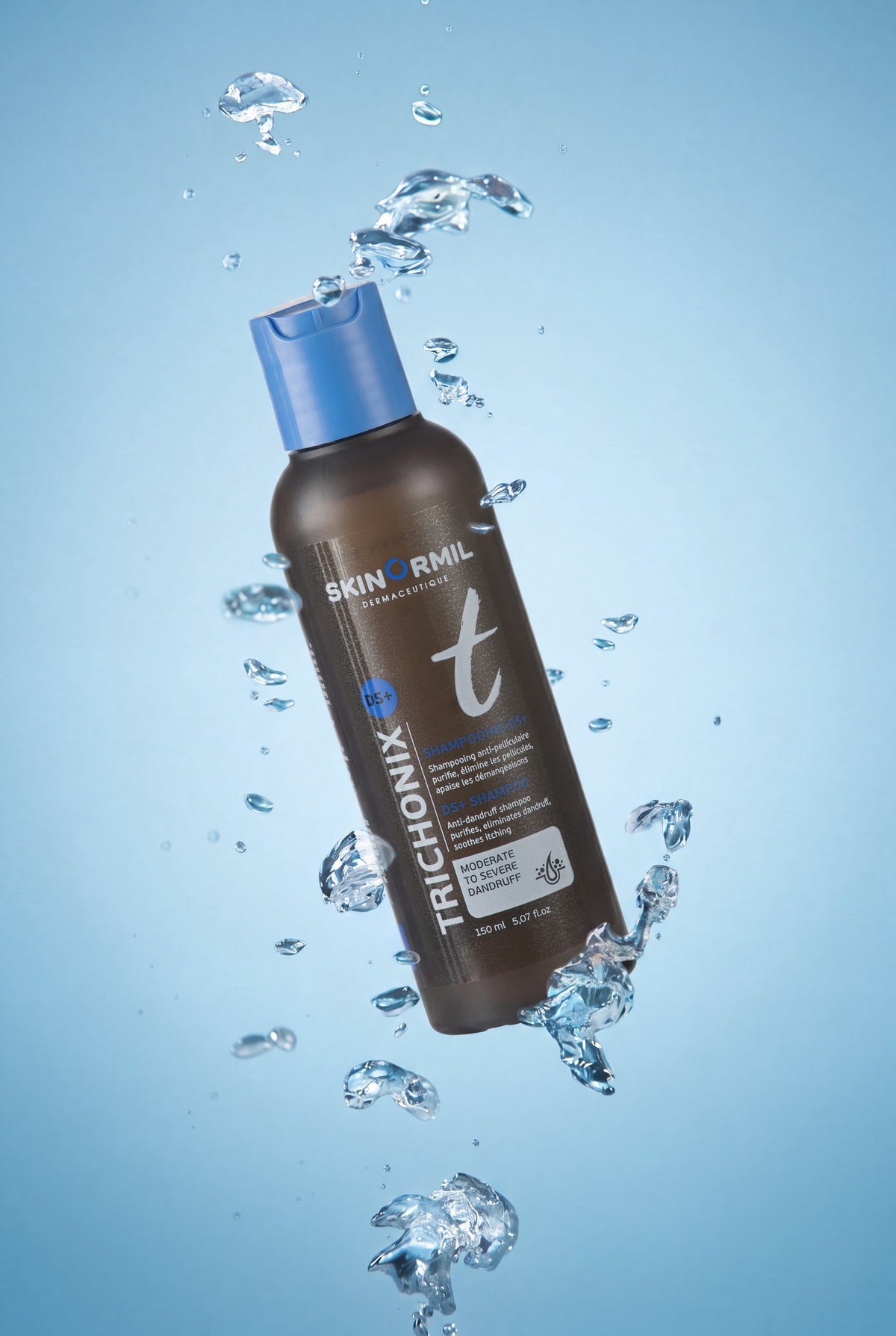
The Trichonix DS+ Shampoo is formulated for severe dandruff and the symptoms of seborrheic dermatitis: persistent itching, inflammation and thick flakes. Use it as an intensive treatment, two to three times a week, until the scalp calms down.
The winning combination
Many people get the best results by alternating: DS+ during flare-ups, then DS to maintain a balanced scalp in between. Our Anti-Dandruff Duo brings both together.
Skinormil tip: leave the shampoo on the scalp for 2 to 3 minutes before rinsing. Active ingredients need contact time to work.
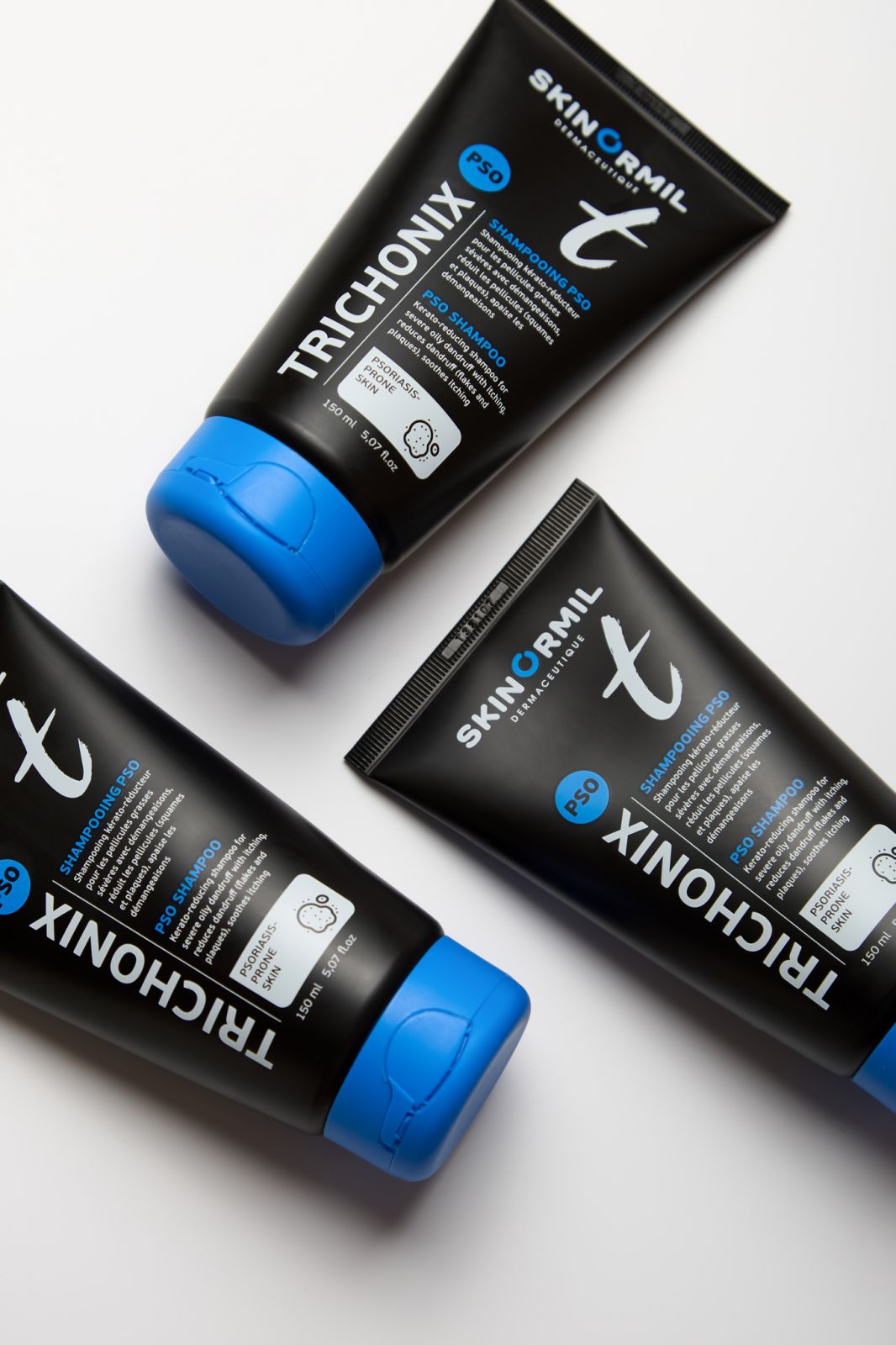
If your symptoms do not improve after four weeks, or if you notice thick plaques with well-defined edges, see a dermatologist: it could be scalp psoriasis, which needs a different approach.